

The first European study on Text-to-Speech perception, conducted by Ipsos for Audioboost among 900 Italians, measures awareness, usage, loyalty and advertising value for a fast-growing audio channel. Text-to-Speech (TTS) moves past its role as an accessibility feature and establishes itself as an audio channel with its own audience, consistent listening habits and a growing place in advertising planning. This is what emerges from the first European study on TTS perception, conducted by Ipsos-Doxa Italia for Audioboost in April 2026 among a representative sample of 900 Italians aged 18 to 65. The results were presented in preview on June 25 at Piccolo Teatro in Milan.
Wide awareness, still-open growth potential
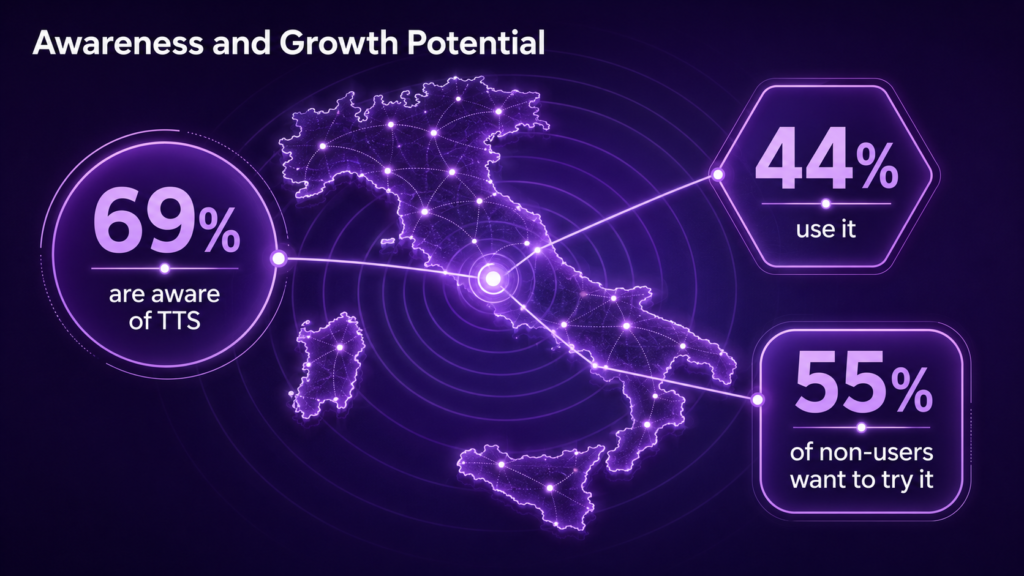
69% of Italians know Text-to-Speech today. Among those aware of it, 44% report using it with variable frequency, a share growing significantly year over year. The remaining 31% of the population has no familiarity with the technology yet, and here lies the most interesting forward-looking figure: 55% of non-users say they are interested in trying it in the future. The reasons currently slowing adoption relate to individual content-consumption preferences, in particular a stronger familiarity with traditional reading and the perception that reading text is faster than listening.
An experience that convinces and builds loyalty
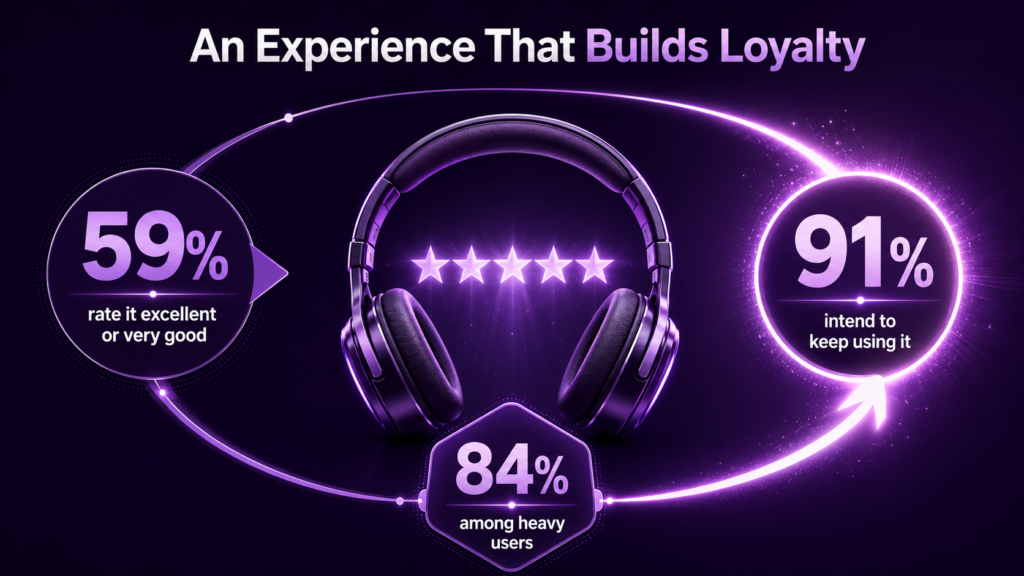
59% of users rate the listening experience “excellent” or “very good” , a share that reaches 84% among heavy users. The naturalness of the synthetic voice remains the most cited area for improvement, a limitation that recent innovations in voice cloning and AI models are reducing significantly. Intent-to-continue data confirms how solid the channel is: 84% of users say they intend to keep using the service, and among frequent users the share reaches 91%.
An informed, digital, multitasking audience
Text-to-Speech users are distributed evenly across the general population from a socio-demographic standpoint, and the sharpest differences emerge in digital consumption behavior. This audience shows a stronger propensity toward podcasts, news apps, TikTok and YouTube, and consists of particularly active readers: 69% say they get informed online always or very often, compared with 50% of those unaware of the service. 52% of users also live in households with children, compared with 31-32% across the other segments analyzed, a figure that suggests TTS is used as a tool to optimize time and integrate information into daily activities. Perceived benefits support this reading: the ability to listen to content while doing other activities is the most cited advantage (40%), followed by listening in low-light conditions(35%) and reduced eye strain (34%). Among the most frequent users, benefits tied to experience quality also emerge: 41% enjoy the pleasure of listening itself, and 37% believe audio supports comprehension and retention. General news remains the most listened-to content (50%), ahead of entertainment (32%), economics and finance (30%), health and wellness (26%) and sport (26%), with a ranking that stays largely stable between occasional and frequent users.
The value for advertising
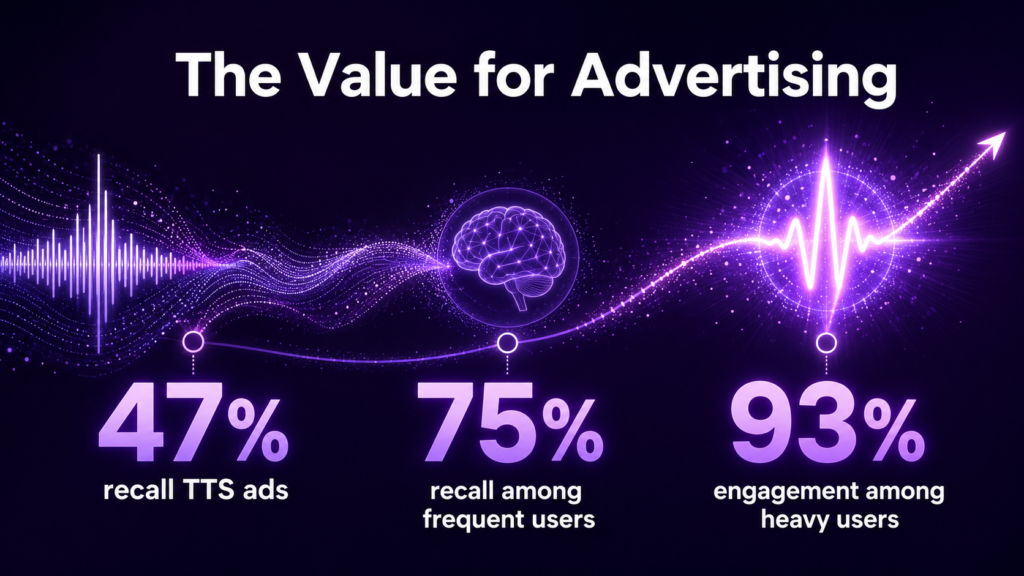
Ad-recall data shows the commercial potential of the channel. 47% of users say they remember advertising messages heard through Text-to-Speech, a share that rises to 75% among frequent users. Among those who recall the message, 75% consider it engaging, a share that reaches 93% among the most frequent users. Active, intentional consumption of informational content in audio format creates a context particularly favorable to attention and message recall.
Speakup-Article™ , the infrastructure behind this channel
These results capture exactly the channel Audioboost enables through Speakup-Article™: editorial content turned into native audio, with its own audience, measurable listening habits and advertising growth still largely untapped. For publishers and brands, Text-to-Speech is no longer an accessibility add-on. It is a consumption channel with numbers of its own.