
Publishers are suffering a significant reduction in audience traffic from organic search, this loss of traffic represents not just declining page views, but a fundamental erosion of the audience relationship that publishers have spent years building. On the other hand, audiences are shifting toward audio consumption of information by both Generation Z and older demographics. Younger audiences increasingly prefer consuming content while multitasking, whether commuting, exercising, or performing other activities. Meanwhile, older audiences appreciate the accessibility and convenience that audio provides, particularly those with visual impairments or reading difficulties. This behavioral shift creates a dilemma for publishers who have built their entire infrastructure around visual, text-based content delivery.
The Audio Revolution: Market Insights and Consumer Demand
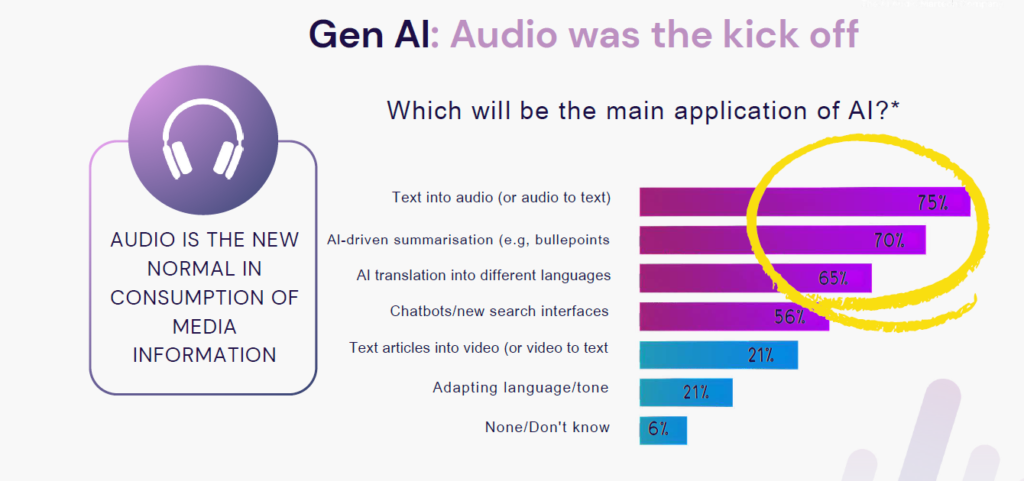
A Research conducted by AudioBoost reveals insights about consumer preferences and artificial intelligence applications. An overwhelming 75% of respondents identified text-to-speech as the primary application of an AI technology in the media environments. This isn’t merely a preference—it represents a fundamental shift in how people want to consume written information in their daily lives.
70% of respondents value AI-driven summarization capabilities, recognizing that condensed, intelligent content extraction helps them process information more efficiently. Translation features ranked highly as well, with 65% acknowledging the importance of AI translation into different languages, breaking down barriers to global content consumption. Even chatbots and new search interfaces garnered significant interest at 56%, showing the strong interest for AI-driven information discovery and interaction.
The AudioBoost Solution: Speakup-Article Technology
AudioBoost’s product named Speakup-Article, represents a breakthrough approach to transfor written articles into immersive audio experiences. Unlike traditional text-to-speech solutions that simply read text aloud, Speakup-Article creates natural-voice audio that integrates seamlessly with article structure, maintaining editorial intent and narrative flow.
Without change any editorial workflow Speakup-Article platform enable publishers to add audio capabilities without requiring extensive technical implementation. Readers maintain complete control over their listening experience, with intuitive play, pause and surf in the contextual playlist directly within the article page—no need to navigate away or download separate applications.
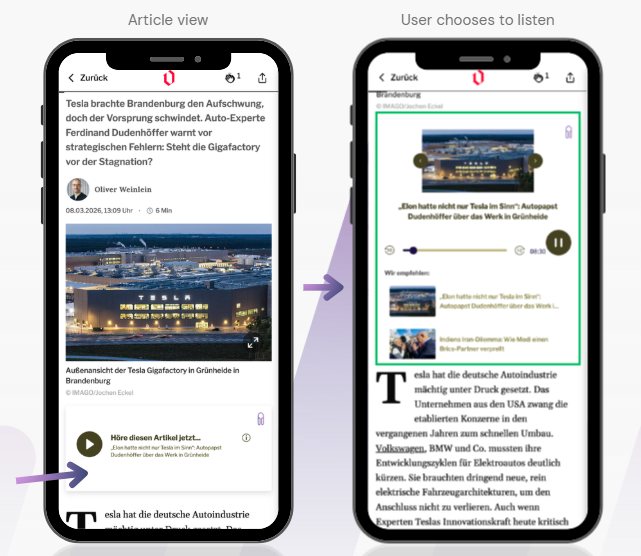
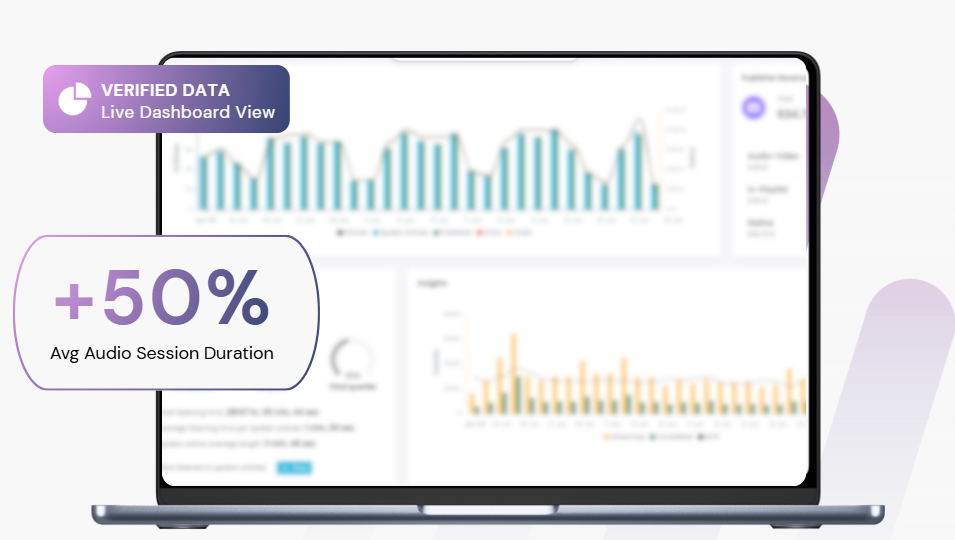
The proof of concept appears in the engagement metrics: among users who press the play button, 35% average LTR demonstrates genuine audience interest and sustained attention, 5-6 minutes is the avarage session duration of Audio sessions: +50% of the typical average session duration on the web. This verified data, tracked through live dashboards, provides publishers with real-time insights into audio performance and listener behavior.
Competitive Positioning: AudioBoost vs Traditional TTS
AudioBoost’s Speakup-Article is different from traditional text-to-speech solutions thanks to its publisher-centric approach. While conventional TTS platforms operate as generic audio APIs designed primarily for developers, AudioBoost delivers a full-stack PubTech and AdTech solution built specifically for media organizations’ unique needs.
Our platform enbeddes sophisticated editorial intelligence, based on semantic analysis, content structure recognition, and user engagement modeling to optimize audio delivery. Advanced owner AI-voice models support any language, enabling publishers to create authentic, fluid audio experiences coherent with their editorial identity. Crucially, AudioBoost enables content production without pre- or post-editing requirements, dramatically reducing the time and cost associated with audio creation.
Proprietary Technology Advantages
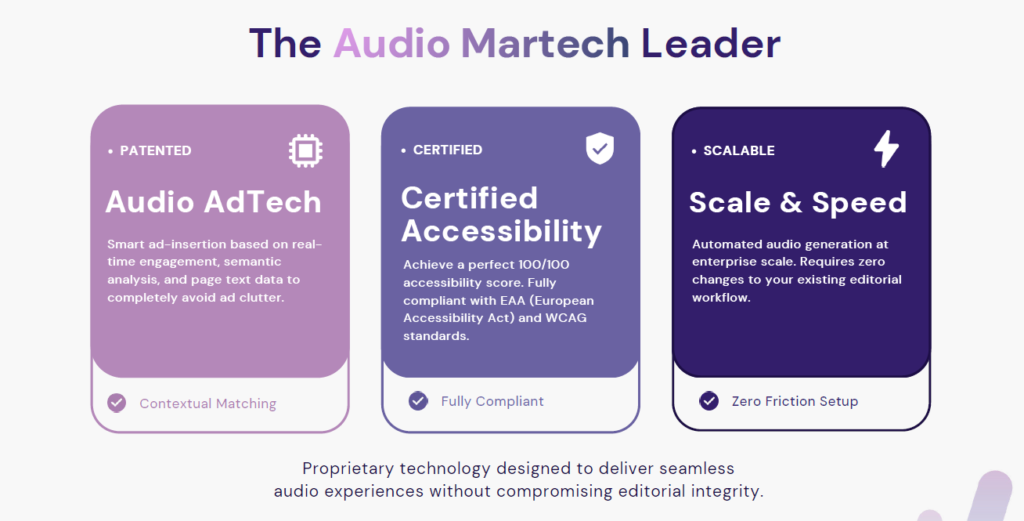
These are our three proprietary pillars: first, our Patented Audio AdTech system implements smart mid-roll at natural break points avoiding the ad clutter without killing user experience. Second, our player is the only one fully accessible according Web Content Accessibility Guidelines (WCAG) standards and is 100% compliance with EAA. Third, easy scalability without requiring changes to existing editorial workflows Speakup-Article is able to convert into audio an entire website in few minutes. Data and contents are organized per domains. This zero-friction setup allows publishers to implement AudioBoost quickly, testing and validating audio engagement without massive upfront investments.
Proven Results and Site Impact
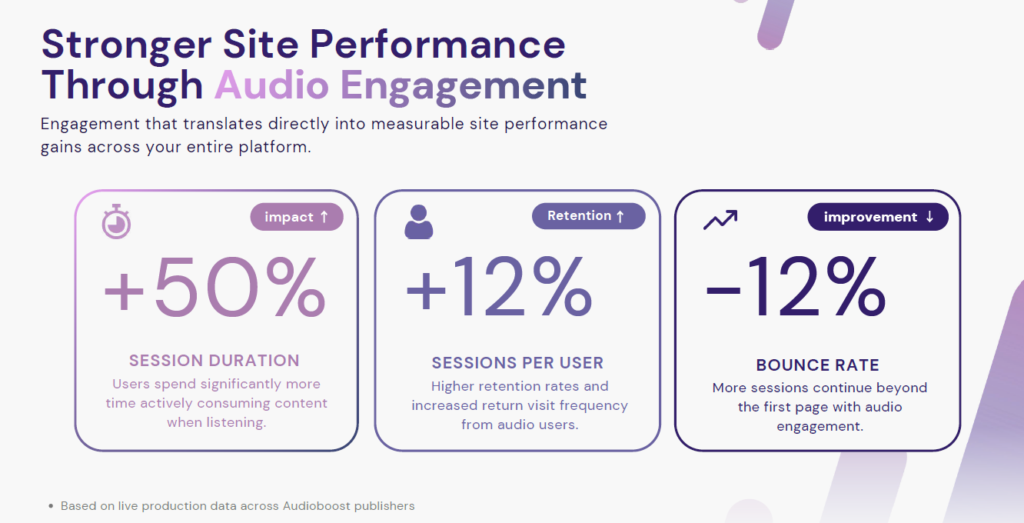
Spoken article with Audioboost improve core site metrics. Session duration increases by an average of 50%, as listeners spend significantly more time consuming 3-4 spoken article in the same session, this engagement creates more indirect value for the hole webpages. Sessions per user improve by 12%, indicating higher retention rates and trustability among audio users. These users develop habits around audio consumption, returning more regularly to publishers who provide quality audio experiences. Audio session registers a minor bounce rate reflecting more engaged sessions rather than abandoning pages after superficial scanning.
Until today more than 1000 publishers has choosen AudioBoost across 3 contentinents: Europe, Latam, Asia: powering millions of monthly audio sessions from major publishers worldwide.