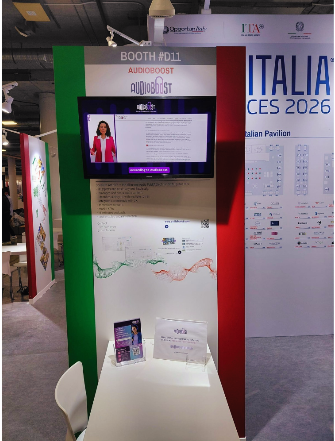
CES has long represented more than a technology showcase; it is a forward-looking indicator of how innovation reshapes industries, consumer behavior, and business models. The convergence of artificial intelligence, connected devices, and data-driven personalization showcased at CES 2026 reinforces a central truth for the media and advertising ecosystem: attention is becoming harder to earn, measure, and sustain.
Against a backdrop of rapid technological acceleration—ranging from AI-powered systems to solar-powered concept vehicles—CES provides a moment of clarity. While innovation promises efficiency and scale, it also introduces fragmentation, signal loss, and increasing competition for consumer attention. In this environment, the core challenge facing marketers, advertisers, creators, and brand leaders is no longer access to technology, but the ability to create meaningful, measurable, and scalable connection with audiences.
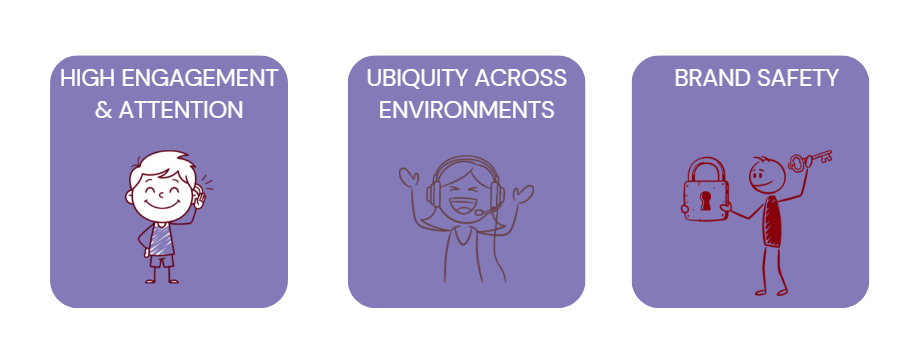
Audio has emerged as a structurally advantaged medium capable of addressing these challenges.
The Central Challenge: Attention in an Oversaturated Ecosystem
Modern advertising operates within an ecosystem defined by saturation. Consumers are exposed to a relentless flow of content across screens, platforms, and devices. Measurement systems remain inconsistent, data signals are often incomplete or incompatible, and traditional attribution models struggle to capture real impact—particularly for formats that do not generate clicks.
In this context, many media channels are evaluated using frameworks that were not designed for them. Audio, in particular, has historically been misunderstood and undervalued. Despite its deep integration into daily life, it has often been aggregated into a single, simplified category in marketing mix models—lumping together terrestrial radio, streaming audio, podcasts, endorsements, and other formats—then judged against performance metrics optimized for display or search.
The result has been systemic underinvestment, not due to lack of effectiveness, but due to lack of clarity.
Connection as the Core Growth Driver
The unifying theme emerging from CES 2026 according SiriusXM is that connection—not reach alone—is the defining currency of future advertising success. Connection operates across multiple dimensions:
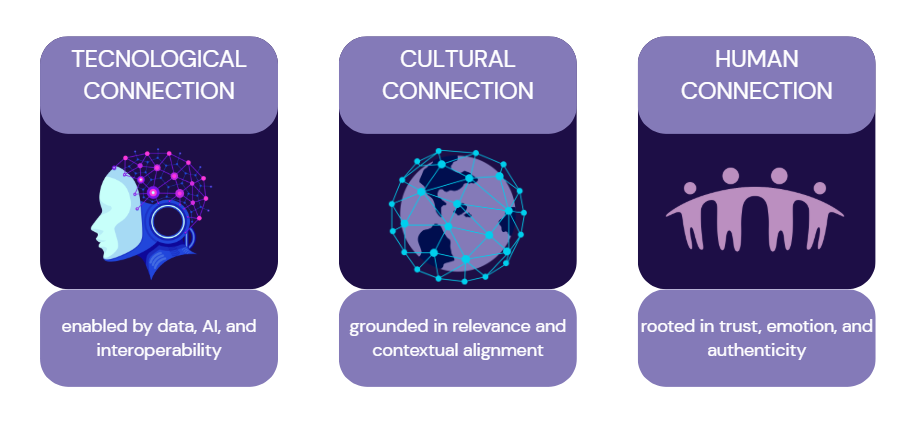
Audio uniquely operates at the intersection of all three.
Unlike visual media, audio integrates seamlessly into consumers’ lives without demanding exclusive attention. It accompanies people while driving, working, exercising, or relaxing. This contextual intimacy allows audio to build sustained relationships with listeners—relationships that translate into measurable brand outcomes when supported by the right infrastructure.
The Human Dimension of Connection
Despite technological advancement, the future of advertising remains fundamentally human. Authenticity, empathy, and trust cannot be automated—they must be cultivated.
At CES 2026 industry leaders discussed connection not as an abstract concept, but as a lived experience underlines: the importance of listening as a leadership skill, the role of human connection in sustaining brand relevance, the balance between AI-driven efficiency and brand humanity. These perspectives reinforce the idea that technology amplifies, rather than replaces, human connection when used intentionally.
Which role for AI Audio
While AI dominates industry discourse, its true value lies not in automation alone, but in its scalability, with reduction of costs of production and delivery. Quality of Audio output depends on the quality of 3 factors: quality of premium contents we manage, quality of Vocal Models we use, quality of the environments we enable. It means taking under control several factors. AI has also a role to make better decisions, optimize campaigns, and drive stronger outcomes.
Audio’s Evolution into a Strategic Media Channel
At the end of the day, Audio advertising has evolved from a supplementary channel into a core component of a future-proof media mix. Its transformation is driven by several structural advantages: