

From 30 seconds to just under a minute—until the advent of AI-powered search, the average time spent on a page was not considered a significant editorial KPI, let alone a key driver for monetization. It was simpler to focus on the thresholds required for “viewability” (30 seconds with at least 50% of the content in view, or 1 minute for videos). In models where page views drive revenue, tactics designed to inflate these numbers—such as infinite scrolling, multi-page layouts, constant page refreshes, and the resulting ad clutter—often disregard the user experience. Consequently, a quick, straightforward search via AI-powered tools can easily replace the need to visit a website at all.
How, then, should we approach this Copernican shift in how people navigate and consume information online? Now that conversational AI is accessible via platforms like WhatsApp, ChatGPT, and Google’s AI Overviews, the most vital assets to cultivate and preserve are a publisher’s “trustability” and brand value—ideally built well before the current landscape emerged—along with the ability to engage an audience and keep them on the page.
Among the various strategies deployed to this end, one has proven particularly effective: the production of audio content—ranging from podcasts to “spoken articles” (powered by advanced text-to-speech technology). This has emerged as a primary driver for audience loyalty and favorability. By offering the option to consume information—whether in “snackable” bites or in-depth pieces—through audio, publishers can foster lasting interactions, encourage repeat visits, drive subscription conversions, and unlock new monetization opportunities. Unlike podcasts, producing “spoken articles” (audio versions of articles) directly on your own website offers significant advantages:
- It prevents the audience from being dispersed across third-party audio platforms, ensuring that valuable socio-demographic and interest-based data remains with you.
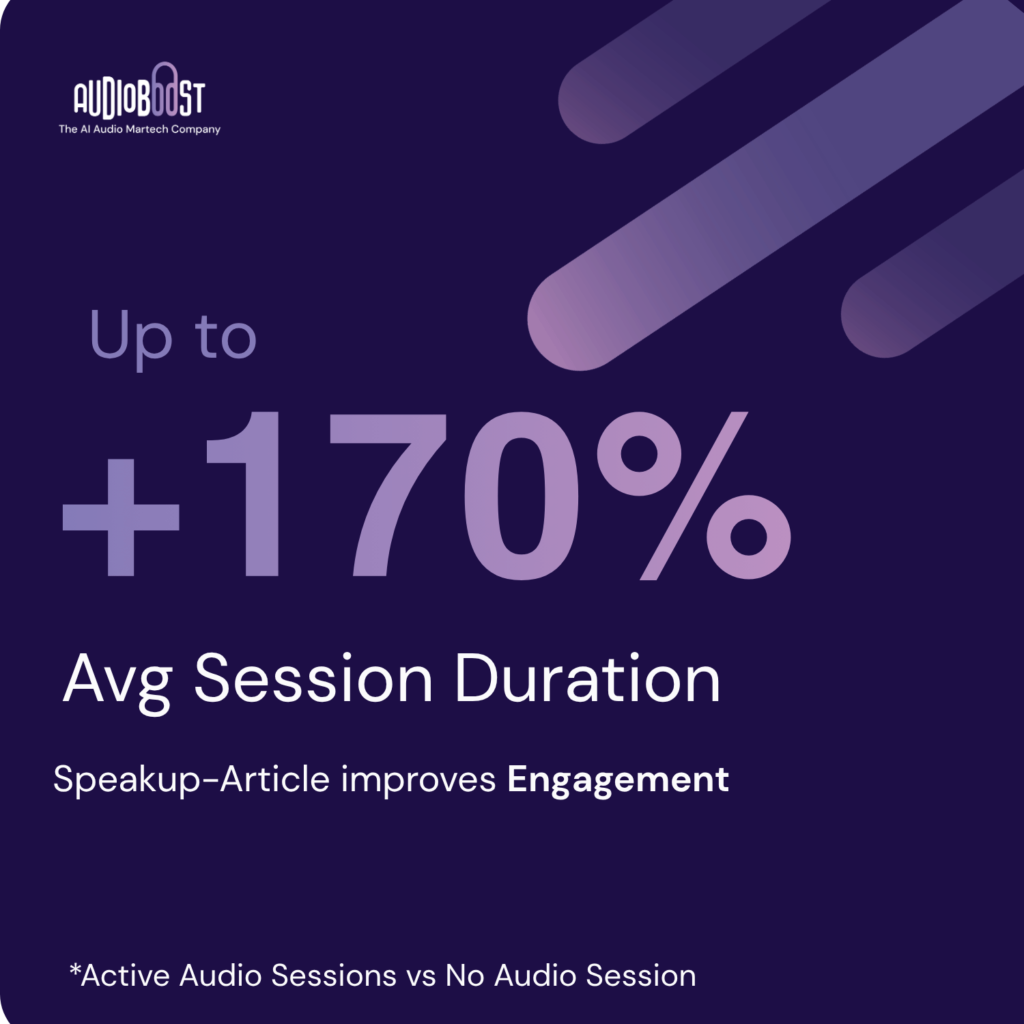
- It increases time spent on the page— in some cases, even doubling it.
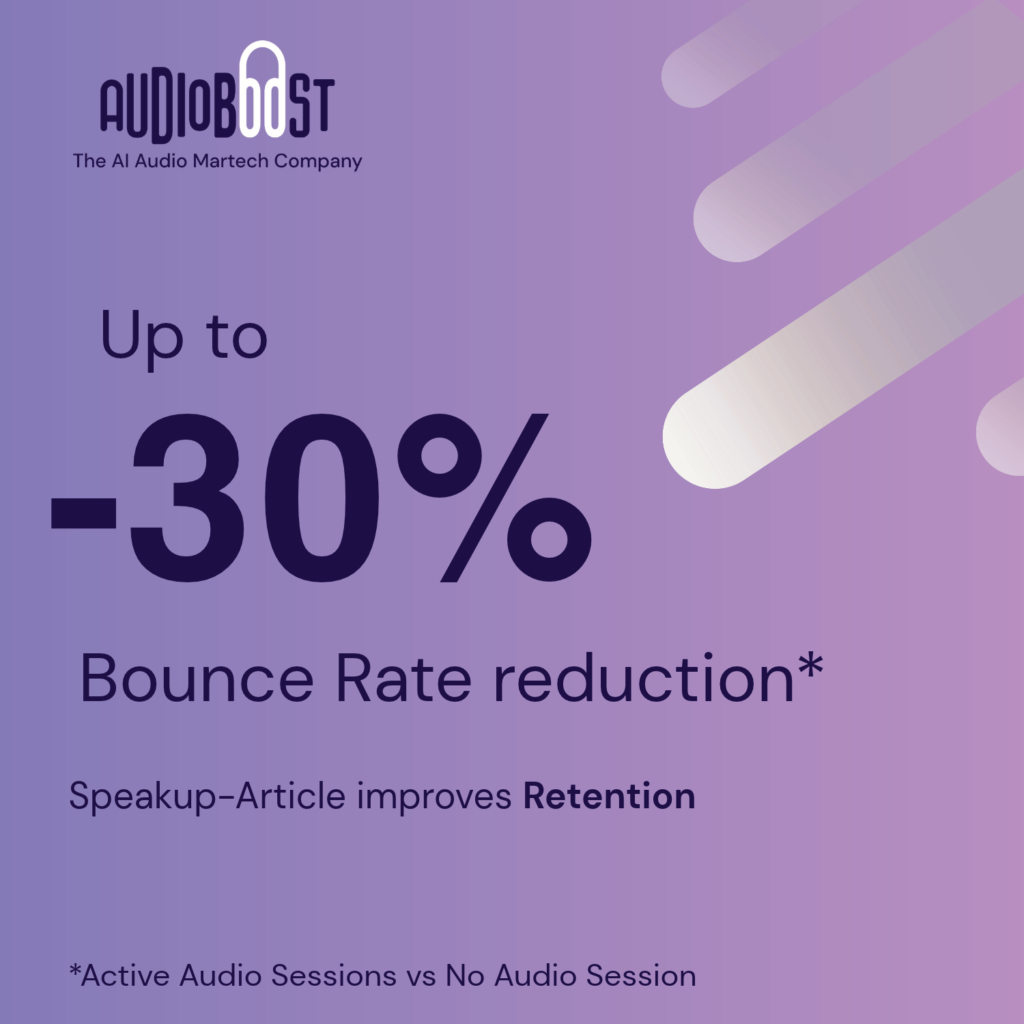
- It reduces the bounce rate for users who are unable or unwilling to read at that particular moment.
- It boosts user loyalty.
- It creates new monetization opportunities, enhancing your RPM (revenue per mille) and indirectly multiplying the potential of your advertising stack—which remains active throughout the entire listening duration, provided the listening takes place on the publisher’s own domain.
Achieving these goals requires a solution that is truly integrated into both the editorial production workflow and the article web pages themselves.
Thanks to over 300 integrations worldwide, Audioboost generates approximately 25,000 hours of listening time per month and is capable of tracking the impact of an audio session compared to a non-audio session.
First, we observe a consistent reduction in the bounce rate; this is likely because users who choose to listen find a way to access the information that aligns with their current needs, making them less inclined to leave the site.
The most significant benefit is seen in the average session duration, which can even double during listening compared to the typical average; we are talking about sessions duration from 3 to 6 minutes, depending on the average length of the individual “Spoken Article.”
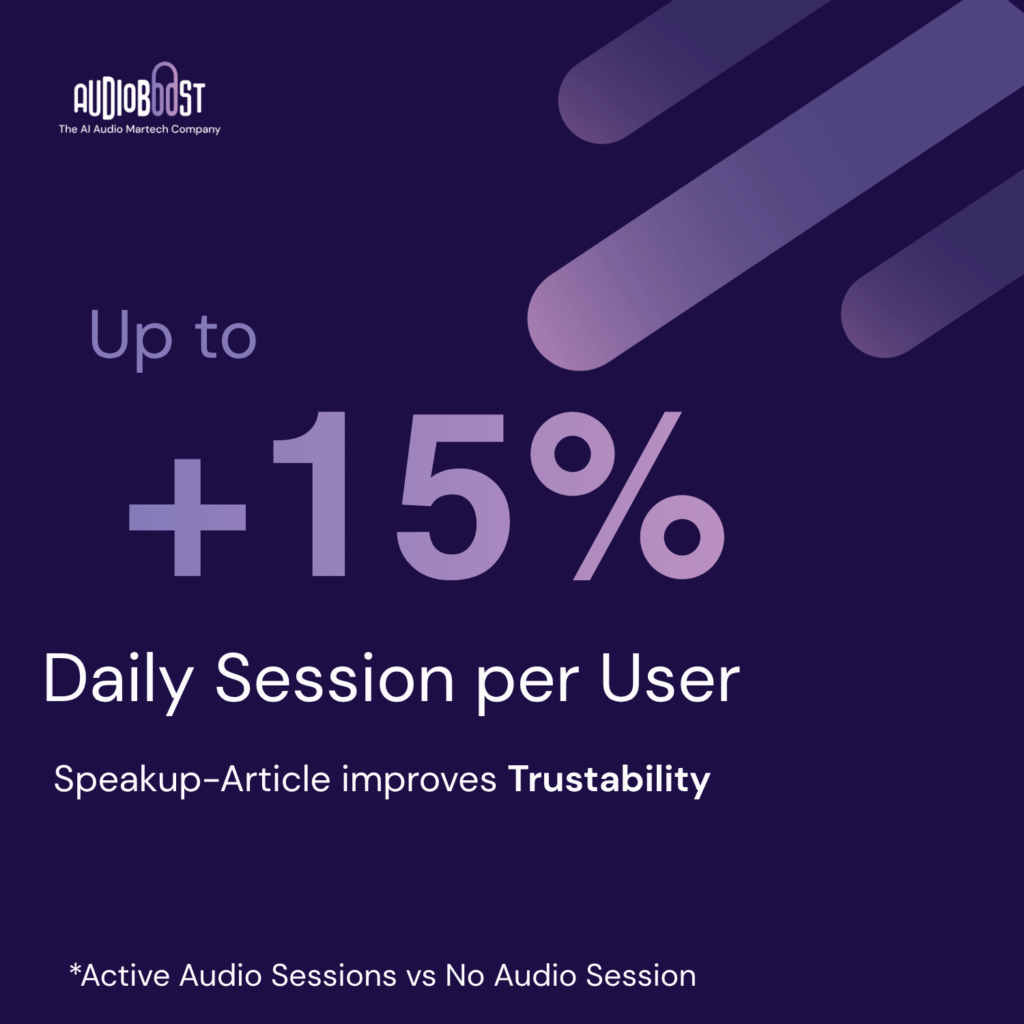
And last but not least, we also observe a trend toward user retention, with an increase in the number of sessions per user within the same day.
Audio does not act as an accelerator for page views; rather, it serves as a means to engage users, keep them connected to the site, and foster conversion into other forms of engagement or subscriptions.
Furthermore, a high-quality audio service enhances recall and the effectiveness of embedded advertising, transforming the avoidance of “ad clutter” into a favorable reception.